
When AI Observability Becomes Compliance Infrastructure
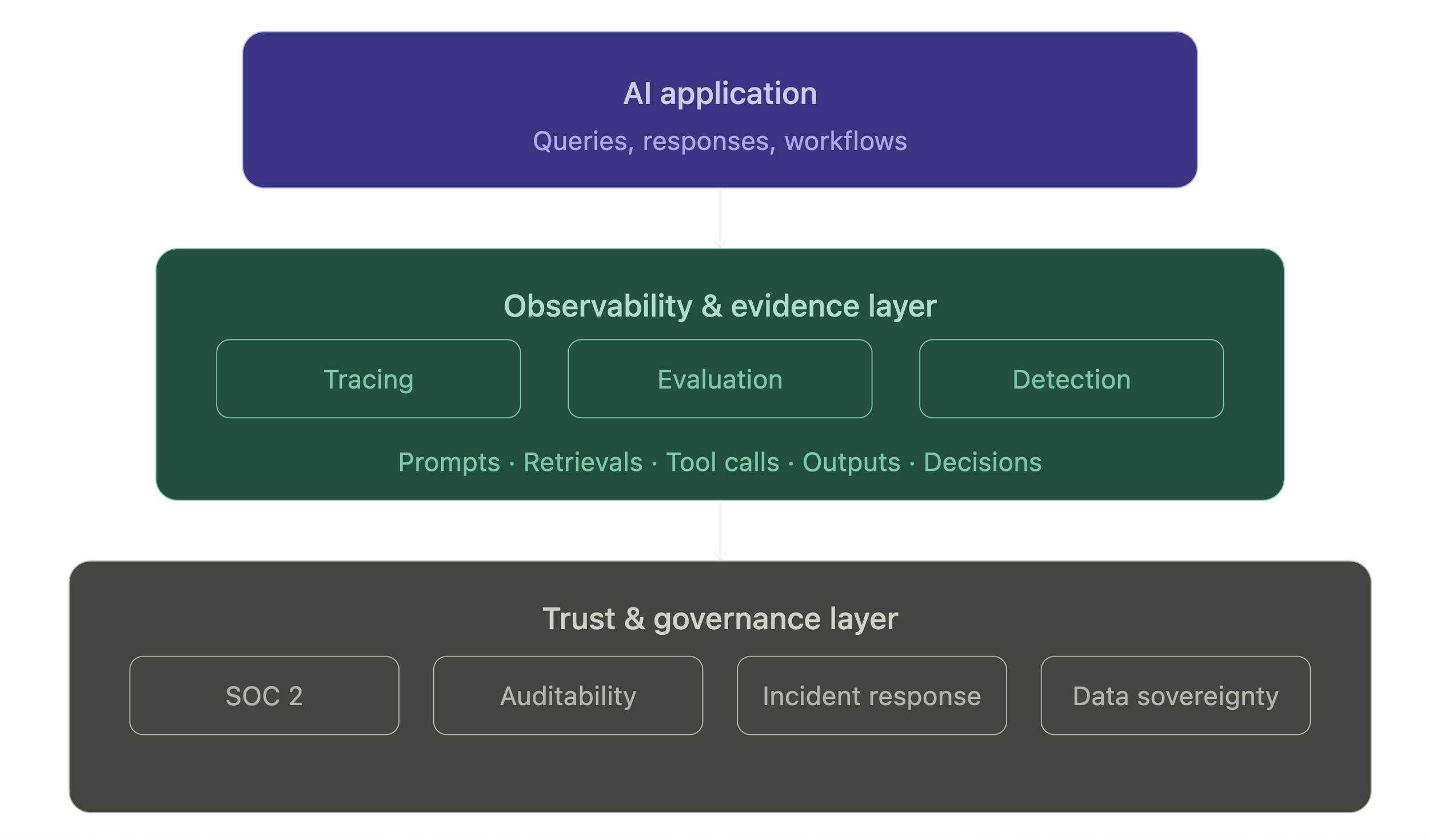
AI Trust Governance Layers
In many AI projects, observability starts as a developer tool. Teams implement tracing to debug prompts, evaluate retrieval quality, or understand why an agent made a particular decision. But as AI systems move into production, observability becomes something much bigger: part of the organization's compliance and governance architecture.
The reason is simple. AI traces often contain more than technical telemetry. They may include prompts, retrieved documents, tool invocations, customer data, business context, and decision paths. From a security and compliance perspective, these traces can become just as sensitive as the underlying application data.
This creates a new set of questions. Where does trace data live? Who controls retention policies? Can traces remain within a regulated environment? What happens if auditors request evidence of model behavior, prompt changes, or incident investigations? At that point, observability is no longer just an engineering concern—it becomes a governance concern.
For organizations operating in financial services, healthcare, government, defense, or other regulated industries, vendor independence and data sovereignty can become important architectural requirements. Self-hosted and open-source observability platforms such as Langfuse or Arize Phoenix are gaining attention not simply because they provide tracing, but because they allow organizations to maintain greater control over where operational AI data resides and how it is managed.
This feels similar to the evolution of traditional security logging. What began as troubleshooting eventually became a critical component of audit readiness, incident response, and regulatory compliance. AI observability appears to be following a similar path.
As organizations continue building AI-powered applications, the question may no longer be whether tracing is needed. The more interesting question may be: who owns the observability layer, and does it align with your security, compliance, and data sovereignty requirements?