
Why LLM Tracing Is Becoming a SOC 2 Requirement for AI Systems
As LLM-powered applications move into production, organizations are discovering that traditional logging and monitoring are no longer sufficient to meet security and compliance expectations like SOC 2. Unlike deterministic systems, LLM applications introduce probabilistic behavior, dynamic tool execution, and external context injection through RAG and agents. This fundamentally changes what “auditability” means. Tracing systems like LangSmith are emerging as the missing layer that makes AI behavior observable, reviewable, and ultimately compliant.
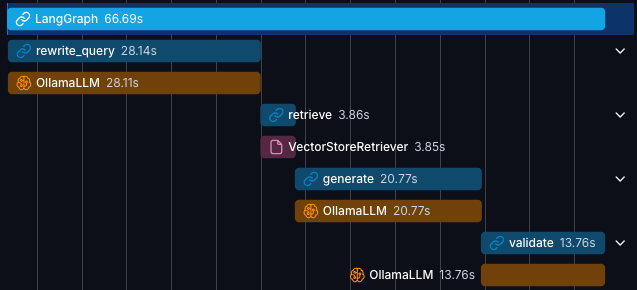
Traces details example
Be able to show every agent’s step
One of the clearest ways to understand this shift is through the lens of OWASP’s Top LLM vulnerabilities. For example, Prompt Injection remains one of the most critical risks, where malicious or untrusted inputs manipulate model behavior or override system instructions. Without tracing, it is nearly impossible to reconstruct how or where an injected instruction influenced downstream decisions. With full execution traces, teams can inspect the exact prompt chain, retrieved context, and tool calls to determine how the model was influenced — effectively turning an opaque attack surface into an auditable event stream.
A second major category is Sensitive Information Disclosure, where models unintentionally expose PII, secrets, or proprietary data through prompts, retrieved context, or generated outputs. In SOC 2 terms, this maps directly to data protection and access control requirements. Tracing provides end-to-end visibility into what data entered the system, how it was transformed, and where it was surfaced in outputs. This allows teams to prove not only that controls exist, but that they are consistently enforced across real-world interactions.
A third relevant risk is Excessive Agency / Over-Privileged Tool Use, where LLM agents can trigger external actions such as API calls, database updates, or workflow executions. In production systems, this becomes a critical security boundary problem. Tracing makes every tool invocation explicit and replayable, allowing teams to validate whether an action was expected, authorized, and aligned with system design. This is especially important for incident response and postmortems, where reconstructing the exact decision path is essential.
When viewed through these risks, LLM tracing becomes more than a debugging tool — it becomes a foundational compliance primitive. For SOC 2 and emerging SOC 3 expectations, organizations need demonstrable evidence of system behavior, not just static controls. Tracing provides that evidence layer by capturing execution-level truth across prompts, models, retrieval systems, and tools. In practice, this shifts AI systems from “black box outputs” to auditable, governable systems — which is exactly what modern security and compliance frameworks are beginning to require.